
The Hidden Connection to Belly Fat, Fatigue & Cravings
Fatty liver disease (also called MASLD — Metabolic Dysfunction-Associated Steatotic Liver Disease) – previously named NAFLD (Nonalcoholic Fatty Liver Disease) — is increasingly common and is strongly connected to modern lifestyle habits, insulin resistance, excess abdominal weight, and inflammation — even in people who drink little or no alcohol.
The good news is that early fatty liver often responds very well to nutrition and lifestyle changes.
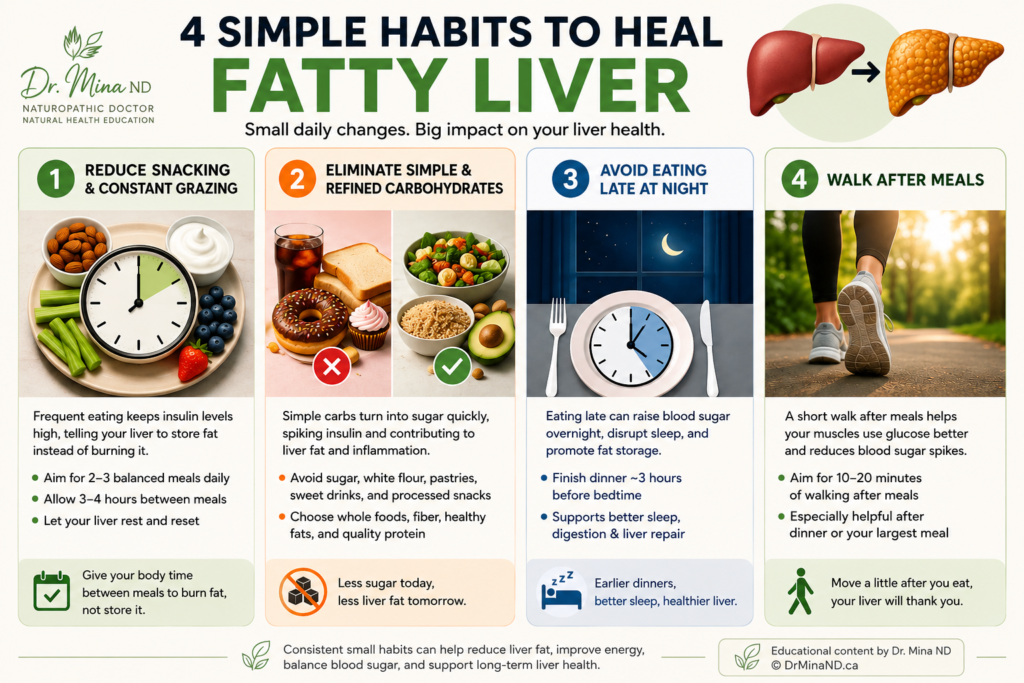
1. Reduce Snacking & Constant Grazing
Many people eat from morning until late evening without giving the body much of a break. Frequent eating — even “healthy snacks” — can keep insulin levels elevated throughout the day.
When insulin remains chronically high:
- the body becomes less efficient at burning fat
- the liver is encouraged to store more fat
- energy crashes and cravings may worsen
Allowing several hours between meals may help improve insulin sensitivity and give the liver time to process stored energy more efficiently.
Helpful Strategies
- Aim for 2–3 balanced meals daily
- Reduce constant snacking
- Include adequate protein, fiber, and healthy fats at meals to improve satiety
2. Eliminate Simple & Refined Carbohydrates
One of the major contributors to fatty liver is excess intake of refined carbohydrates and sugars, especially sugary beverages and processed foods. Foods that rapidly convert to sugar in the bloodstream can contribute to:
- insulin resistance
- elevated triglycerides
- increased liver fat accumulation
- abdominal weight gain
| Foods to Eliminate | Better Choices |
|---|---|
|
|
3. Avoid Eating Late at Night
Late-night eating may negatively affect blood sugar regulation, digestion, sleep quality, and fat metabolism. At night, the body naturally becomes less insulin-sensitive. Eating large meals close to bedtime may:
- increase blood sugar overnight
- impair restorative sleep
- worsen reflux and bloating
- contribute to fat storage
A Simple Goal
Try to finish eating approximately 3-4 hours before bedtime.
For example:
- if bedtime is 10 PM → finish dinner by 6 or 7 PM
Many people notice:
- improved sleep
- less morning puffiness
- better digestion
- reduced cravings
4. Walk After Meals
One of the simplest and most underrated habits for metabolic health is walking after meals. Even a short walk can help muscles use glucose more effectively and reduce the post-meal blood sugar spike.
Benefits of Walking After Meals
- supports blood sugar control
- may improve insulin sensitivity
- assists digestion
- supports weight management
- may help reduce liver fat over time
Practical Recommendation
Aim for:
- 10–20 minutes of walking after meals
- especially after dinner or the largest meal of the day
This does not need to be intense exercise — consistency matters more than intensity.
Key Takeaway
Fatty liver is often closely linked to metabolic health, insulin resistance, stress, poor sleep, and modern eating patterns.
Small consistent habits can have a meaningful impact:
- fewer snacks
- less refined sugar
- earlier dinners
- more walking
These foundational lifestyle changes may help support:
- liver health
- energy
- blood sugar balance
- abdominal weight management
- overall metabolic wellness
While these lifestyle habits can be very supportive for liver and metabolic health, every person’s health picture is unique. If you are struggling with fatigue, abdominal weight gain, cravings, digestive concerns, or fatty liver, a personalized naturopathic assessment can help tailor nutrition, lifestyle strategies, and targeted supplements to your specific health needs and long-term wellness goals.